Make The Books And Agreement Meet.
Contributions, guaranteed payments, reimbursements and distributions need more than a year-end split. Connect the operating agreement with actual transactions and ownership history.
 THE TAX CUTTERY®
Tax Preparation · Tax Planning · Tax Resolution
The Business You Built Together
You share the work, the risk and the opportunity. Your partnership return should connect the business agreement, the books and each owner’s tax picture.
Cash in your pocket and income on your K-1 are different things. Form 1065 brings those differences into view—before they become a surprise on a partner’s personal return.
The initial consultation is free. No purchase required. Return preparation and planning are separately engaged.
Taxable income can differ from cash received.
Debt and other adjustments can make the numbers different.
Federal tax classification determines which return generally applies.
The Questions Behind The Return
Contributions, guaranteed payments, reimbursements and distributions need more than a year-end split. Connect the operating agreement with actual transactions and ownership history.
Rental activity, financing, improvements and property contributions affect more than cash flow. Identify who owns what and how the activity is treated before allocating results.
A buy-in, departure, death or interest sale can create allocation, basis and reporting questions. Keep transaction documents with the tax file instead of treating the change as a bookkeeping footnote.
A Hypothetical Partnership Example
Assume a two-partner business has $100,000 of ordinary taxable income, with valid equal allocations under its agreement. Each partner’s share is $50,000 even if one partner receives only a $10,000 cash distribution.
The distribution and allocated income serve different tax purposes. Basis, separately stated items and the partner’s circumstances still need review. Planning estimates around withdrawals alone can miss the point.
Illustration only, assuming valid equal allocations and no other items. This does not calculate final tax or basis.
Good Records Make The Next Step Clearer
Begin with what you have. The initial consultation puts the concern in context; the secure intake connects it with the records.
Do not post tax identifiers or documents publicly. Use the firm’s secure intake for private records.
Direct Answers. Informed Decisions.
Domestic partnerships generally file Form 1065, subject to exceptions. A domestic multi-member LLC is generally treated as a partnership unless it elects another classification. A single-owner LLC is not automatically a partnership.
Partnership income generally passes through to partners rather than being taxed to the partnership as ordinary entity-level federal income tax. Special rules, withholding, certain partnership audit adjustments and state taxes can create additional obligations.
You may. Partners generally report their allocated tax items, which need not equal cash received. Review the Schedule K-1, the agreement and the partner’s own limitations and tax situation.
Not necessarily. A partner’s outside basis and the partnership’s capital-account reporting serve different purposes. Debt, contributions and other adjustments can create differences that matter when claiming losses or receiving distributions.
Not automatically. Allocations must be evaluated under the partnership agreement and federal tax rules. Special allocations, guaranteed payments, contributed property and changes in ownership deserve specific review.
Identify exactly what is missing and when it is needed. An extension may be appropriate, but incomplete ownership, contribution or allocation records should not be replaced with guesses. Partners should coordinate their own filing and payment obligations.
Tell us about the business, the owners, the tax years and the concern. The firm can then define the information and engagement needed. The free initial consultation is not partnership return preparation or a free written opinion.
Generally, Form 1065 is due on the 15th day of the third month after its tax year ends: ordinarily March 15 for a calendar-year partnership, adjusted for weekends and legal holidays. Confirm the year, applicable relief and any timely extension. The partners’ individual deadline is a separate matter.
Partners are not employees of their partnership and generally should not receive a W-2 from it for their partner services. Guaranteed payments and distributive shares have different reporting rules. Non-partner employees are a separate payroll question.
No. Outside basis, at-risk, passive activity and other applicable limitations can restrict a partner’s deduction. The K-1 alone does not prove the full loss is currently deductible. Keep contribution, debt, distribution and suspended-loss records.
Not always. Partnerships subject to the centralized partnership audit regime generally use an administrative adjustment request to correct partnership-related items. Eligibility, elections and the year determine the procedure; do not simply replace K-1s without reviewing the rules.
No. Spousal businesses have specific rules. A state-law LLC does not automatically qualify for the qualified joint venture election. Community-property treatment and other classification rules may matter. Review ownership, state law and elections before choosing a method.
Yes. The free prerecorded initial consultation is open without a purchase or paid appointment. Book ownership is optional for tax preparation and required for Tax Advisory. Partnership preparation, personal returns, research and written advice are separately scoped.
Your Foundation For The Next Decision
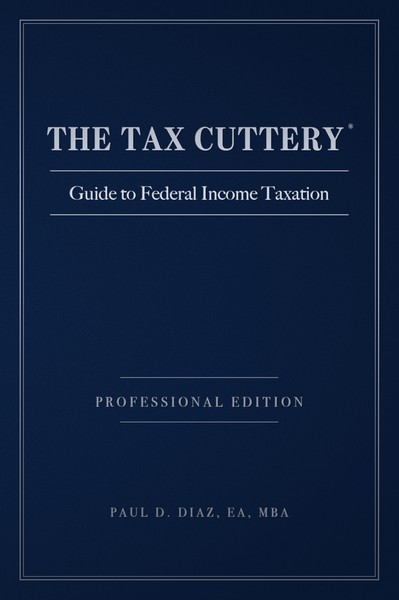
THE TAX CUTTERY® Guide to Federal Income Taxation, Professional Edition.
Your business and household are connected. Build the federal income tax knowledge to understand what the return is telling you, ask better ownership questions and plan beyond the next distribution.
The Guide builds broad federal income tax understanding. Specialized forms still require their official instructions and appropriately defined professional work.
Already own a copy? Register Your Copy →
Your Next Step
The free prerecorded initial tax consultation gathers your concern and the people and years involved. It is an intake conversation, not a live appointment or a free written opinion.
Genesis continues the secure intake when applicable. Keep the facts, supporting documents and life changes in the same picture.
Return preparation, research and Tax Advisory are separately engaged. Book ownership is optional for preparation and required for Tax Advisory. Paid live time is booked separately when needed.
THE TAX CUTTERY® is an independent federal tax practice. This is general education, not a filing determination or an accepted engagement. Federal partnership tax reporting and separately scoped planning. Legal drafting, bookkeeping, payroll, state filings and partners’ individual returns require their own defined scope.